Secret People Community Period
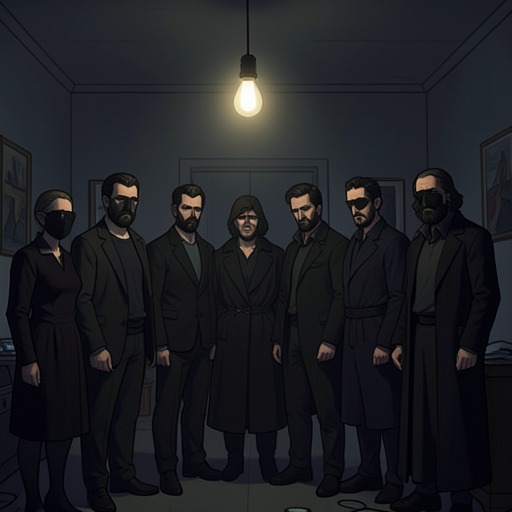
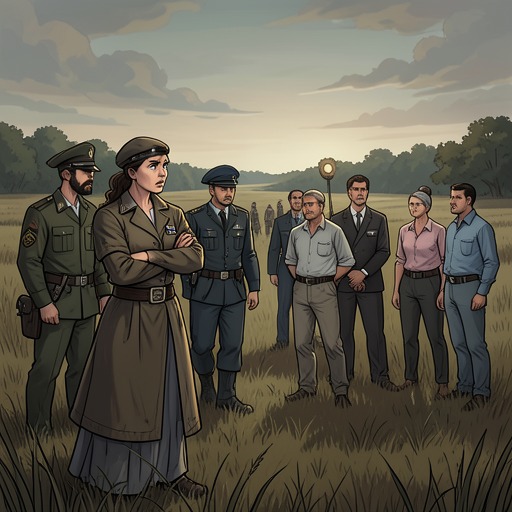
Blood CanticleThe Secret People period refers to the years in which Morrigan and Ashlar established an island community for the Taltos: a carefully provided-for life that was also a controlled refuge from human violence. Its collapse exposed the limits of their paternal protection. Silas’s rebellion, clandestine breeding, and the community’s inability to govern its own growth turned the experiment into a disaster; later, Lorkyn’s proposal for a protected community at Mayfair Medical offered a different, less isolated possibility.
Founding and Conditions
Morrigan and Ashlar, whom Oberon regarded as Mother and Father, founded a community of twenty Taltos. Ashlar believed that supervision, education, and diversions could sustain it, while Morrigan reportedly understood that the arrangement might not endure. Oberon remembered their life as good, but judged Ashlar too naïve to believe it could last. Their disagreement foreshadows the community’s central weakness: care could provide comfort, but it could not resolve the pressures of reproduction and authority.
The household gave its members access to travel and study while keeping their nature concealed. Ashlar’s plane carried them to major cities, including Rome and Bombay, and they also visited London, Rio, Hong Kong, Paris, and Mexico City. They were taught to observe people and pass as human. Teachers were flown to the island for two or three weeks at a time; the community had a library of books and films in its main building, a yacht for trips on the water, and a cleanup crew that came twice a week. This abundance was paired with strict caution: Ashlar allowed no telephones or Internet, a restriction Oberon later regarded as a possible fatal error.
The refuge also answered a real danger. Oberon said that humans generally killed male Taltos while allowing female Taltos to live for human use. From his perspective, remaining within the Secret People was preferable to risking exposure beyond it. Yet the protective system relied on isolation and parental oversight rather than on a durable way to manage conflict among the community’s members.
Reproduction and Unstable Authority
The vulnerability of the community was not merely political. Rowan described the Taltos as a distinct mammal that evolved apart from Homo sapiens on a volcanic island in the North Sea. She estimated that the two shared about forty-five percent of their genes and said that Taltos were generally taller, with unusually long limbs and largely cartilaginous skeletons. In pure Taltos, conception and fetal development could proceed rapidly, and birth placed severe stress on the mother; an infant emerged looking like a small adult and began maturing immediately.
A newborn’s development depended on its mother’s milk and telepathic nurture. Without milk in the first hour, the infant risked permanent stunting; with it, the child could reach its full height within that hour, usually six and a half feet and, for males, as much as seven feet. Nursing could continue for weeks, months, or years, taking a heavy toll on the mother. These needs made reproduction an ongoing communal concern, not a brief event that parental supervision could easily contain.
The Taltos’ intelligence and reproductive capacity also made them, in Rowan’s account, potentially dangerous, while their naivete and lack of aggression left them vulnerable. She described them as acutely sensitive to rhythm and music, which could nearly paralyze them. The novel places these biological descriptions alongside the community’s history: an account of difference that helps explain both the desire to protect the Taltos and the impulse to supervise and manage them.
Michael connected that history to human settlement in the British Isles and the tradition of conflict between the “tall people” and more aggressive invaders. He said that unions between Taltos and human women were usually fatal to the women, while human males caused only limited harm to Taltos women, although repeated unions could deplete their eggs. Some offspring became malformed “little people,” while other descendants carried Taltos genes within human populations. Rowan added that wars and massacres scattered the Taltos, driving them into hiding and concealment of their births. This history of interbreeding and persecution gives the Secret People’s seclusion a background of inherited danger, even as isolation proves incapable of preventing internal conflict.
Rebellion and Collapse
Oberon’s account makes clear that Ashlar’s benevolent provision did not amount to effective rule. Ashlar could not control the young males, secret births continued, and members bred in defiance of the community’s rules. Oberon suggested that controlling reproduction might require killing unwanted births or imposing chastity belts, measures that the founders did not adopt. The dilemma reveals the violence implicit in trying to govern the Taltos’ rapid reproduction through coercion, and the limits of a community whose founders would not impose such control.
The decisive rupture came when Silas began a rebellion by slowly poisoning Morrigan and Ashlar. Oberon recalled that other members were also breeding secretly and plotting against Silas, so the community was already beyond the founders’ control. He regretted not killing Silas when Silas first began speaking sedition, but also doubted that the Secret People could have lasted indefinitely. The poisoning and the conspiracies were thus not an isolated breach in an otherwise stable arrangement; they made visible a wider collapse of authority.
Oberon described Morrigan as an oracle, Ashlar as a dreamer, and Silas as a poisoner, compressing the community’s fate into contrasting roles. He said that Ashlar had lacked the temperament to control the young males and that secret births had been frequent from the beginning. By the time Ashlar spoke repeatedly of Rowan as someone who would know what to do, he was effectively a prisoner in the penthouse and Morrigan was conscious only occasionally. The founders’ care had become captivity, while their earlier inability to govern had left the community exposed to rebellion.
Aftermath and Significance
The community lasted about four years before Rodrigo took over the island. Oberon’s memories of its journeys and lessons survived, but so did the recognition that its sheltered life had ended in bloodshed and disorder. When Oberon later left with the rescued Taltos, he remembered a religious statue and was promised that it would be brought to him; the small concern accompanied his departure from the island and its failed society. His recollections preserve the affection he still felt for the Secret People without disguising the cost of its collapse.
At Mayfair Medical, Oberon and Miravelle were admitted for tests. Miravelle had increasingly reverted to a childlike state, and Oberon became impatient with her. Lorkyn proposed a model sharply different from the island community: an environment in which the Taltos could live, work, and be protected while remaining able to function. She wanted to continue her medical studies and become a doctor; Rowan had accepted her as a pupil. Lorkyn also saw opportunities for Oberon and Miravelle, describing the institution as a self-contained world where supervision need not become conspicuous constraint.
The contrast is not between perfect freedom and perfect safety. The Secret People provided education, travel, and comfort, but its isolation, reproductive tensions, and reliance on parental control left it vulnerable to internal violence and seizure by Rodrigo. Lorkyn’s proposed refuge instead links protection to study, work, and participation in a wider institution. The period therefore matters as both a remembered home and a warning: good intentions and abundant provision could not, by themselves, make a Taltos community sustainable.